The fifth article in our regional snapshot series focuses on South East Asia.
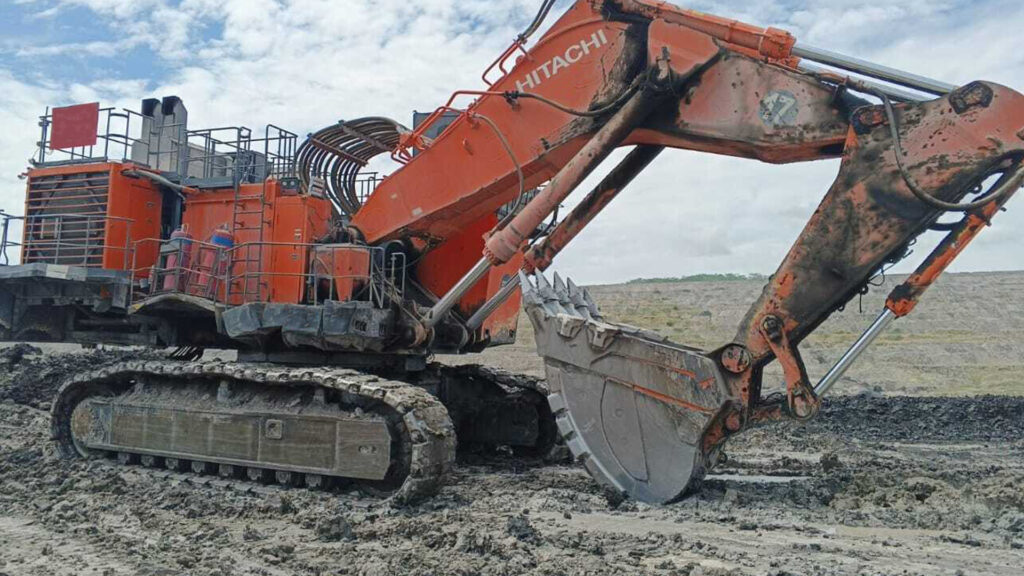
Above: Excavators in Indonesian mines need to deal with deep clay rich mud that clogs up undercarriage components.
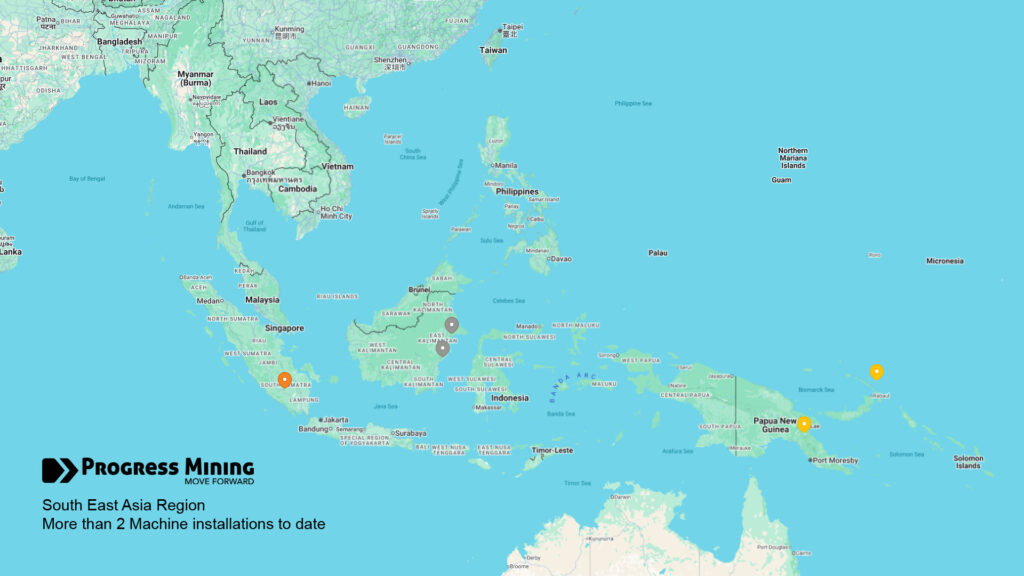
South East Asia is characterised by a tropical equatorial climate with a wet and a dry season. In this article we will be focusing specifically on mining operations in Indonesia mainly the islands of Kalimantan and Sulawesi. Here the tropical climate has consistently high temperatures, extreme humidity, and intense seasonal rainfall. Heavy monsoonal rain can rapidly deteriorate ground conditions increasing flooding risk, thus creating persistent mud and water exposure to mining equipment. South East Asia is rich with resources, large open-pit coal operations dominate much of Indonesia’s mining regions, alongside significant nickel mining and processing operations. Gold and copper mining operations are also present throughout Southeast Asia. Currently Progress Mining has more than 2 machines installed at mine sites in Kalimantan and Sulawesi.
The tropical climate and heavy rain falls combined with heavy clay in the constantly wet terrain, make for predominantly soft to moderately abrasive ground conditions. This creates deep sticky mud that leads to heavily saturated haul and pit environments. Open-pit mine sites in these regions are commonly found in uneven terrain, with steep access roads. These locations make access and operations in these wet ground conditions difficult due to material packing build up in undercarriage components.
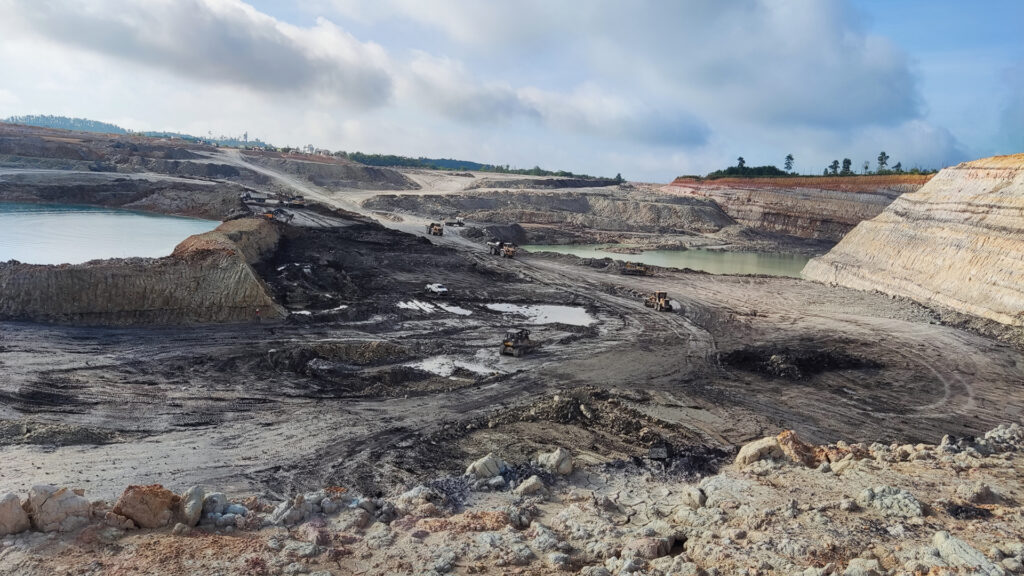
Above: Large open-pit coal mine in Kalimantan shows how wet and muddy the mine site becomes after heavy monsoonal rains.
The team at Progress Mining has observed that the constant exposure to mud, water, and fine slurry-like material accelerates undercarriage wear. The wet muddy conditions increase the risk of material packing around rollers, idlers, and sprockets, creating physical resistance that restricts the components’ ability to rotate freely. Also, the sealing performance of lubricated components such as rollers and idlers is challenged by the high humidity environment and possibility of water ingress. The thick mud also makes access for component inspection extra difficult as the mud is hard to remove. All these factors combined with corrosion, abrasive contamination, and reduced component cleanliness contribute to shortened service life and increased maintenance requirements.
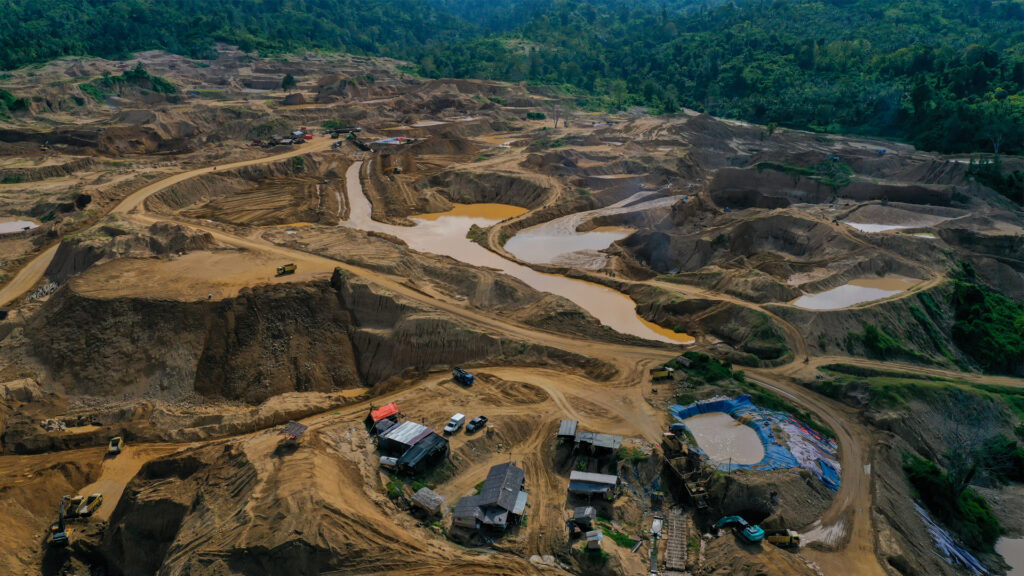
Above: Open-pit gold mine in Sulawesi region shows steep access roads and extremely wet working conditions.
To deal with these harsh, wet conditions Progress Mining undercarriage components are designed and manufactured to the highest standards. Components undergo heat treatment, precision machining and induction hardening to ensure components have the optimal mechanical strength and physical durability needed to tolerate extra strain caused by material packing. Premium lifetime seals are used in all roller and idler assemblies to help keep fine slurry-like material and water out for longer, helping extend component life. These are just some of the processes that go into making Progress Mining undercarriages. To learn more about what is involved in our design and manufacturing processes click here.
If your mining operations face similar harsh conditions to those outlined in this article or you are located in South East Asia and want to make contact click here to find the nearest Sales Representative or Distributors in your region. Where ever mining is Progress Mining is there to help.