The fourth article in our regional snapshot series focuses on South America.
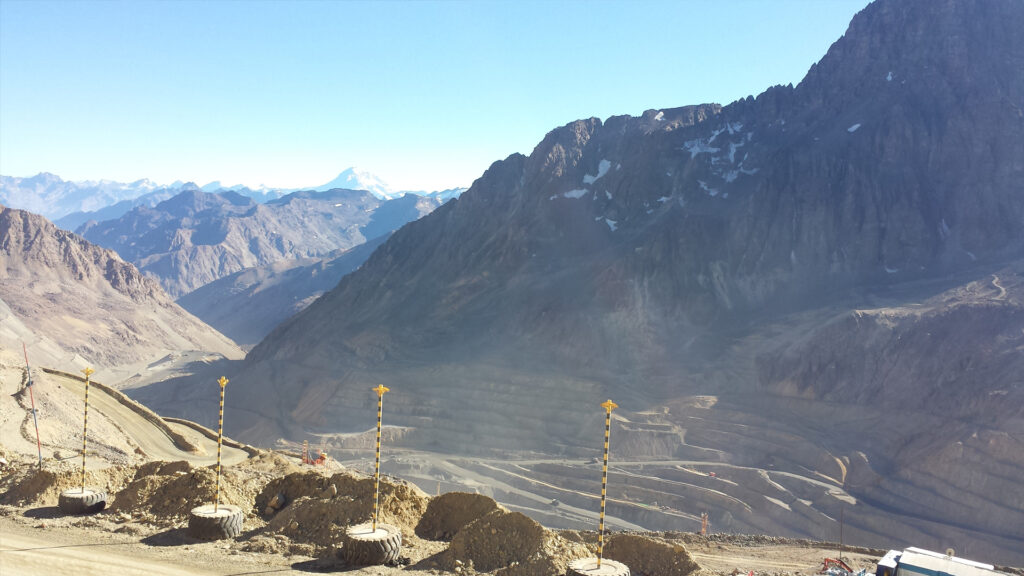
Above: Large open-pit mine in the Andean region showcasing the harsh and remote working conditions.
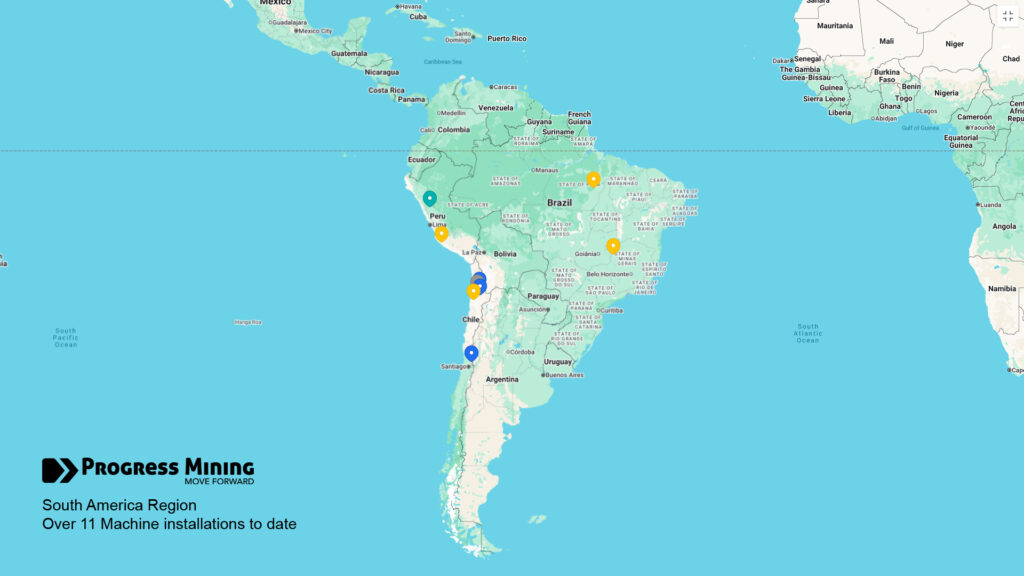
South America is a continent made up of three distinct regions, the west coast edged by the towering Andes mountains, followed by extensive eastern highlands, then a vast central river basin that extends all the way to the east coast. These varying terrains include diverse climates from the world’s driest desert the Atacama, to the world’s largest rainforest the Amazon. The challenges of operating in a region with such high variability of terrain types and climates is not lost on the Progress Mining team. To date Progress Mining has over 11 machines installed at mine sites along the Andean corridor in Chile, Peru and Argentina and in the Brazilian mining regions of Minas Gerais and Pará.
The Andean mines are located at high-altitudes where the terrain is made up of hard and abrasive rocks. Large open-pit copper mines dominate the Andean region, alongside lithium mines in Argentina and Chile. Operations at these sites typically involve steep gradients, fractured rock, and sharp, angular material driving high impact loading and abrasive wear. The extreme altitude of the region means there are low oxygen levels that impact equipment performance and cooling efficiency, large temperature swings between day and night, intense UV exposure, and arid environments. All these factors combine to make mining operations more difficult.
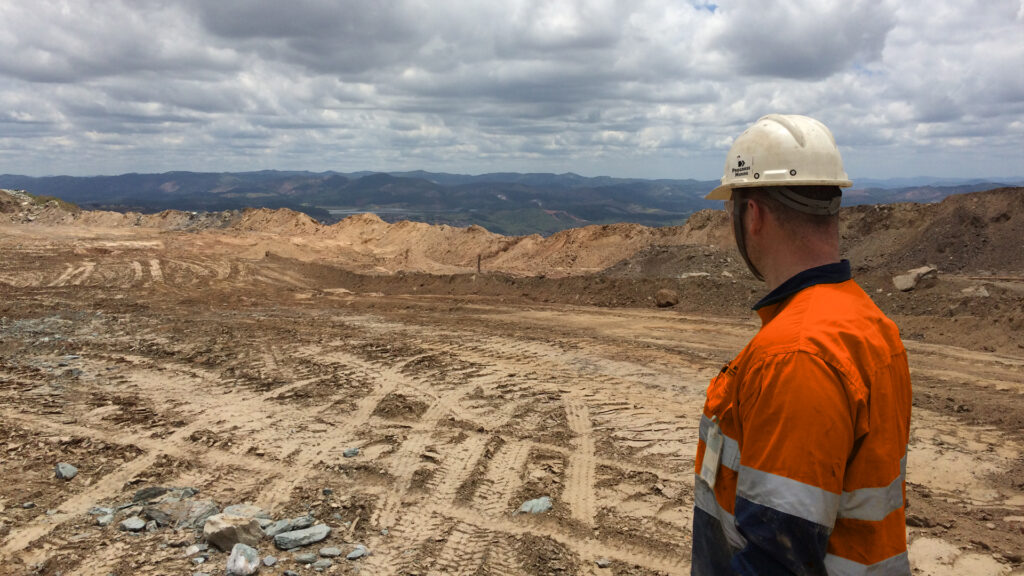
Above: This expansive view of the Andean corridor from a mine site demonstrates the high altitude of these mining operations.
In contrast to the high-altitude, hard and abrasive rock conditions in the Andean mines, the iron ore, gold and bauxite mines in Brazil are quite different. The terrain is softer but often composed of highly compacted iron-rich ground which is hard on machinery. Unlike the arid regions to the west, Brazilian operations in the east have to deal with high rainfall, humidity, and muddy conditions.
Although very different the main operational challenges in these environments all contribute to accelerated component wear. The Andean Mines are afflicted by abrasive rock and high-impact loading, this accelerates undercarriage wear, particularly in copper and iron ore applications. The high altitude reduces engine efficiency and cooling performance, increasing thermal stress on components. Fine dust in this arid environment compromises the sealing systems and lubrication integrity of undercarriage components. The opposite problems arise in the Brazilian mining regions. Wet and muddy conditions in tropical areas promote material packing, corrosion and accelerated wear of undercarriage components.
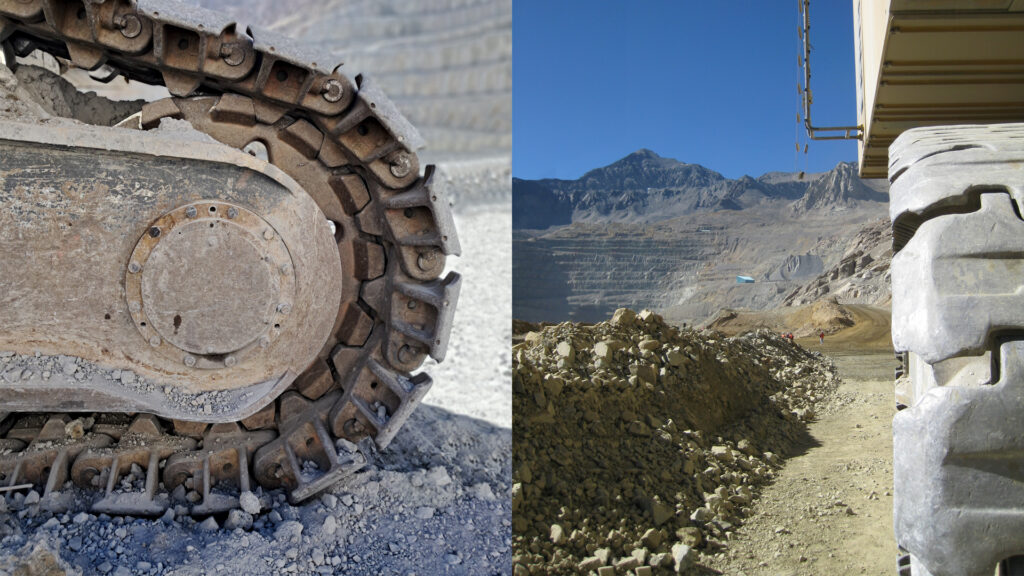
Above: High-altitude, hard and abrasive rock conditions in the Andean mines contribute to accelerated component wear.
To help our customers get the best out of their undercarriage components our team works tirelessly to find the best solutions for the challenges in each region. Research and development fueled by the insights gained from continuous Condition Monitoring Inspections enable our team and the customer to learn more about what processes and design innovations can be implemented to improve performance and durability in these challenging environments. All Progress Mining products are designed in Australia and manufactured for strength and durability in our ISO9001 certified European based factory.
If you are located in South America or your mining operations face similar harsh conditions click here to find the nearest Sales Representative or Distributors in your region. Where ever mining is Progress Mining is there to help.