There are many different styles of undercarriage available in the market, each with unique design features that set them apart. Progress Mining supplies all undercarriage types giving us a unique insight into what works best in different situations. To illustrate how these undercarriage styles differ we will be posting a series of articles. Each article will be a spotlight on a particular undercarriage style, outlining their key features as well as their advantages and disadvantages.
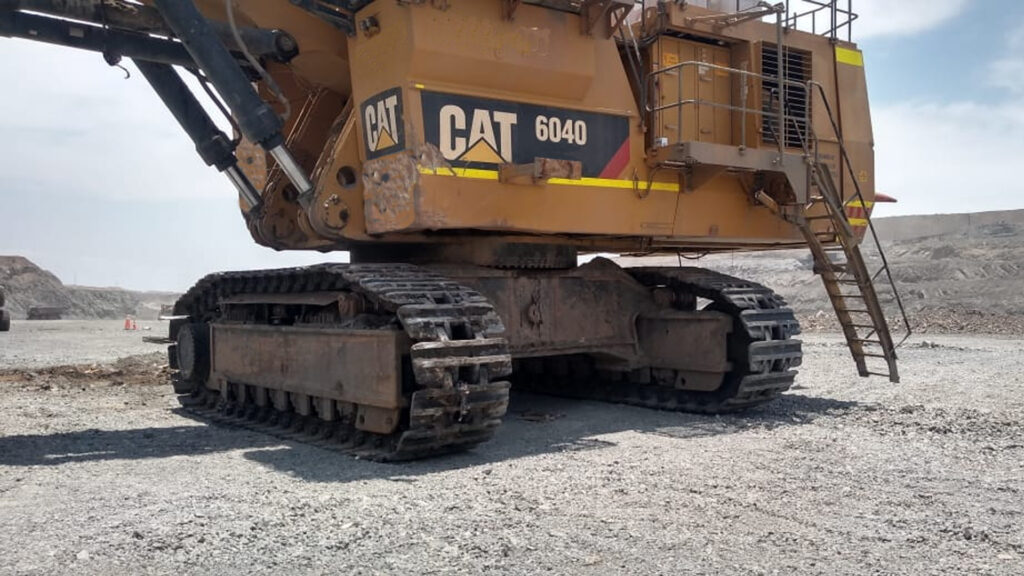
Above: Caterpillar® 6040 hydraulics excavator with top drive, single sunken drive lug and dual symmetric roller undercarriage design.
The first article in this series focuses on the 6030, 6040 and 6060 range of Caterpillar® hydraulic excavators. The features that define this style of undercarriage include:
- Top drive type
- Single, sunken track shoe drive lug configuration
- Dual, symmetric track shoe roller path configuration.
This undercarriage design is resilient and versatile, with a strong emphasis on minimizing roller path wear. Progress Mining has supplied undercarriages for these platforms to customers operating in coal, zinc, gold, copper, iron and oil sand mines across Africa, Australasia, North and South America.
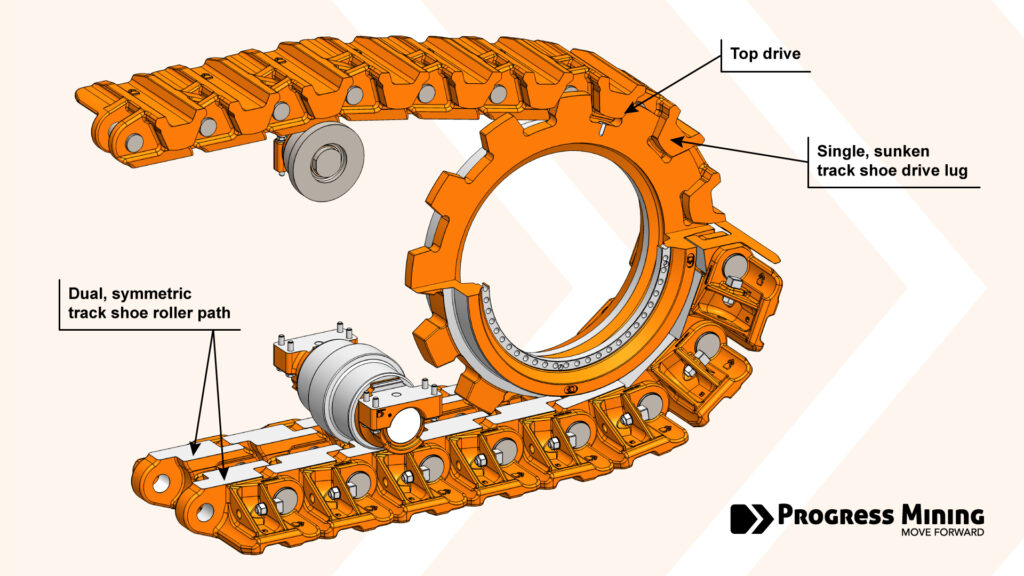
Above: Caterpillar® 6060 undercarriage design illustrating the different design features.
This undercarriage design has proven its efficacy over time, the following advantages show why it is used in many mining fleets:
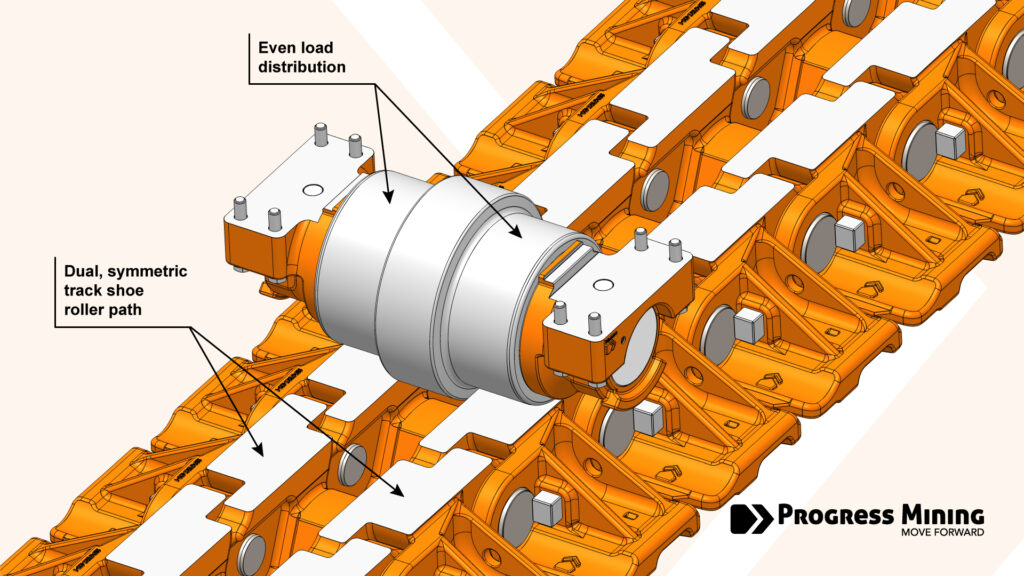
- The dual roller path design of the track shoe results in greater contact area, decreasing contact pressure and subsequent wear.
- The symmetric track shoe design allows for even load distribution across the length of the roller, reducing wear over time and extending component life.
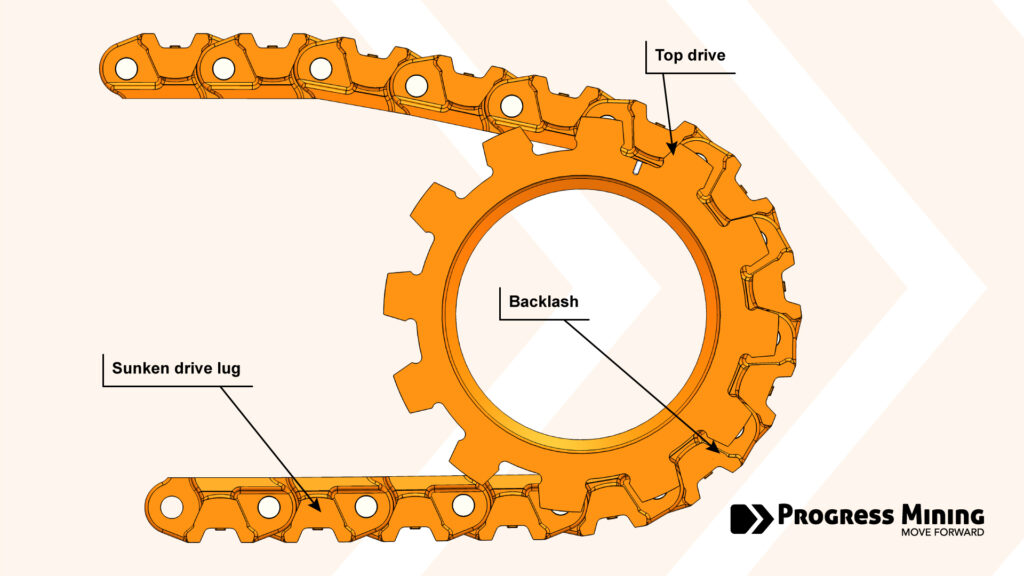
- The top drive mechanism minimizes backlash in the system, further reducing roller path wear. Backlash is the distance between the non-driven shoe and sprocket drive lug flanks. The larger the distance the higher the sliding between the shoe and sprocket roller paths is during a change in sprocket rotation.
- The top drive, sunken drive lug configuration allows for maximum room for wear in the system. This means that the system has a greater tolerance for combined track shoe and drive sprocket wear, extending the life of the drive lugs which often limits undercarriage life.
As with any engineering design, there are certain aspects of the undercarriage configuration that may present disadvantages:
- The single drive lug design means contact pressure and resulting wear rates are higher than a dual drive lug system. This increases wear over time.
- The top drive means that only one drive lug is engaged at a time, leading to higher localised stress at the engaged drive lug.
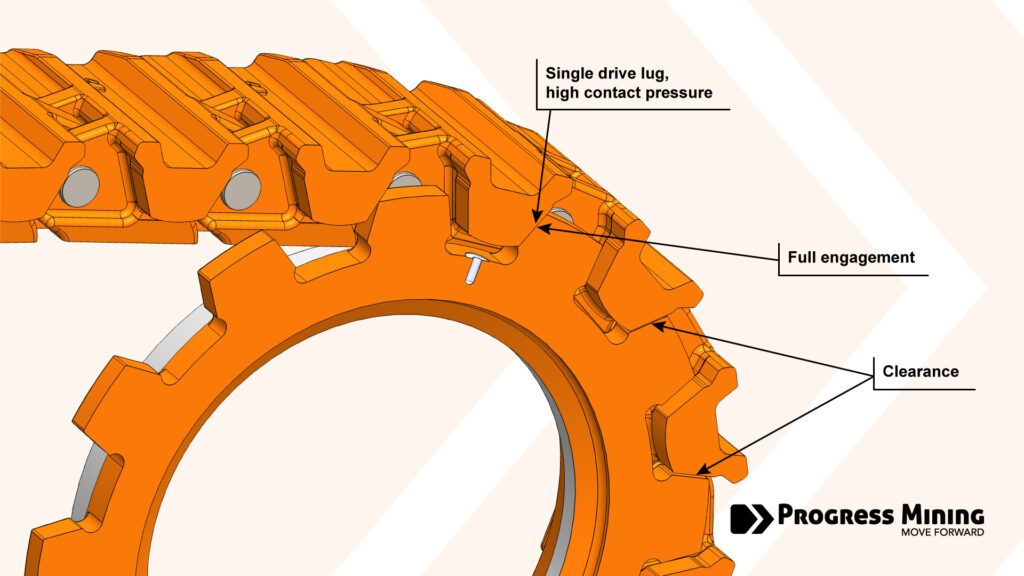
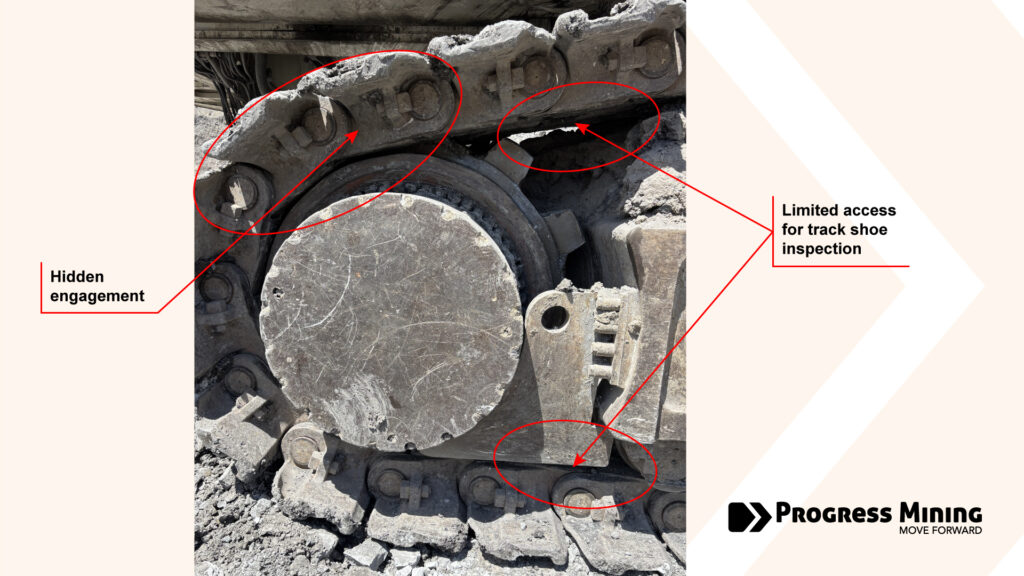
- The sunken drive lug design and lack of access from the side frame can make it difficult to inspect components. The drive lug engagement is hidden in this design and this can make engagement issues difficult to diagnose.
Progress Mining supply all undercarriage types to many different mine sites across the globe. The knowledge and insights gathered over the years puts our team in a position to understand the complexities of each undercarriage design. Using the data gathered from countless Condition Monitoring inspections in parallel with CAD engagement analysis, our team is well placed to analyse your fleet and provide recommendations based on your needs.
To find out how the team at progress Mining can help visit our Services page or email us at info@progressmining.com
Where ever mining is Progress Mining is there to help.